
1. Project Introduction — Background & Problem Statement
Young people between the ages of 5 and 29 account for a disproportionately high share of road traffic fatalities and injuries globally. In West Africa, secondary school students and youth walk, cycle, and travel daily on roads that are increasingly dangerous — yet formal road safety education remains largely absent from school curricula across Liberia, Sierra Leone, and The Gambia.
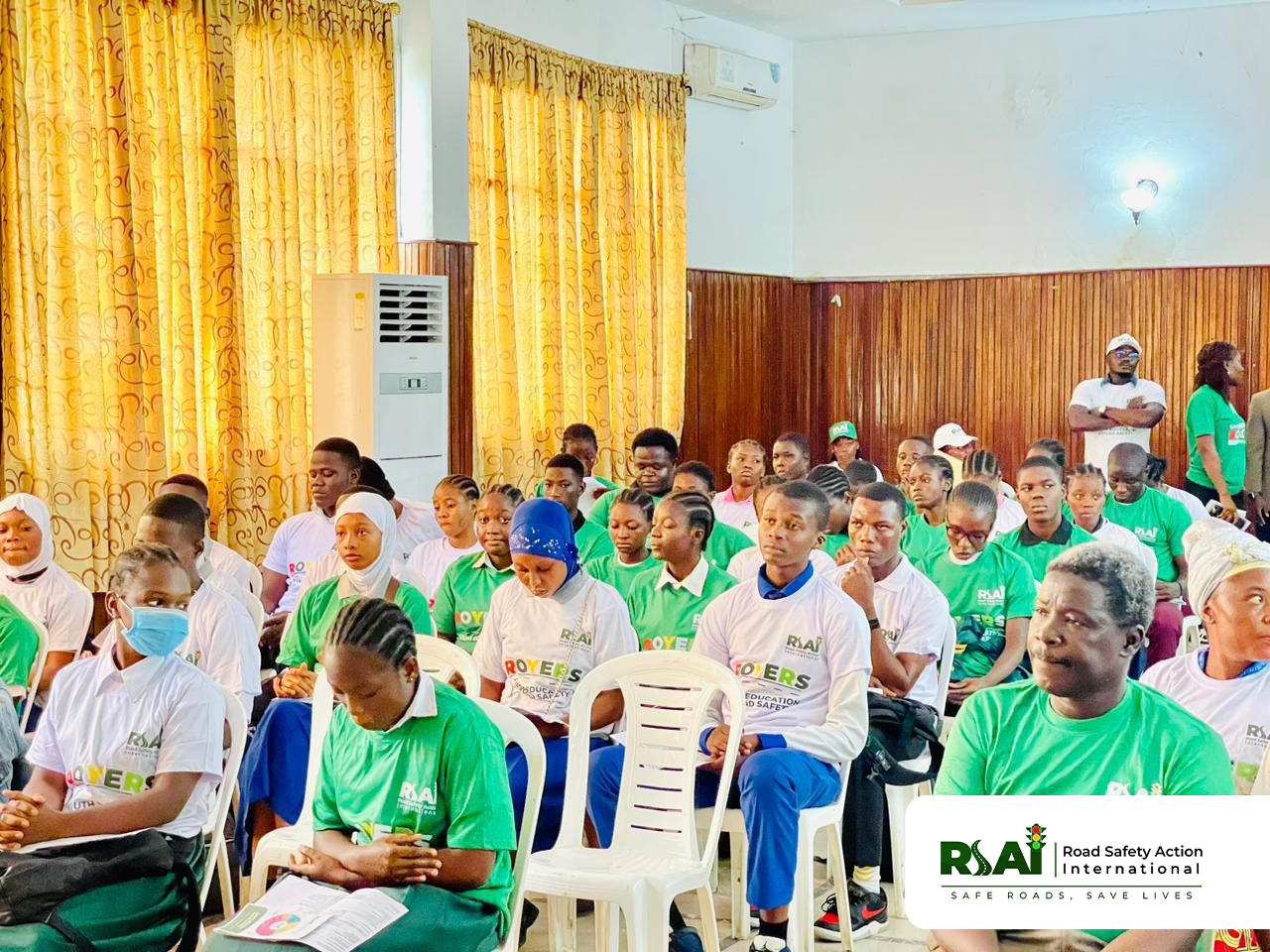
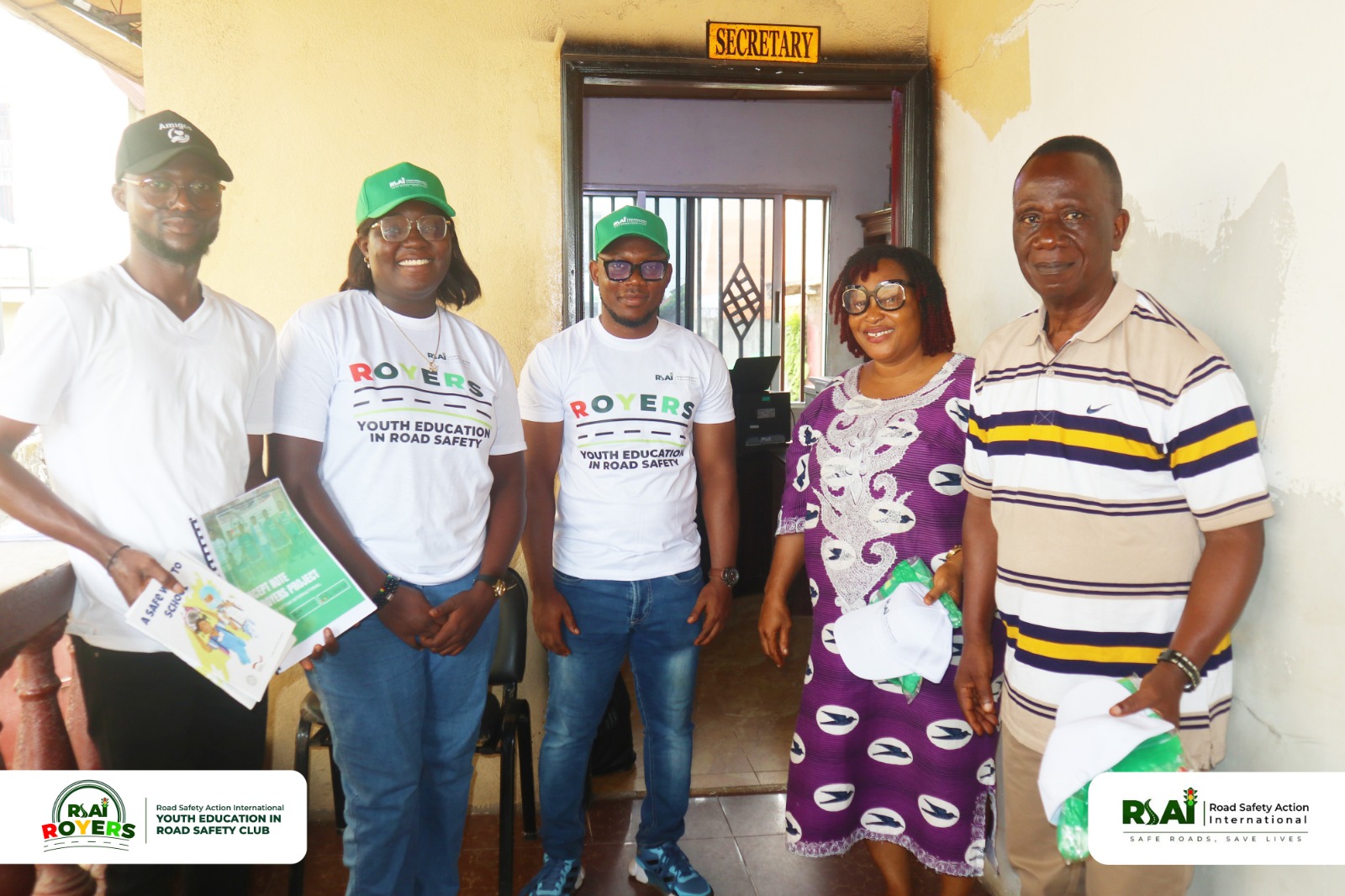
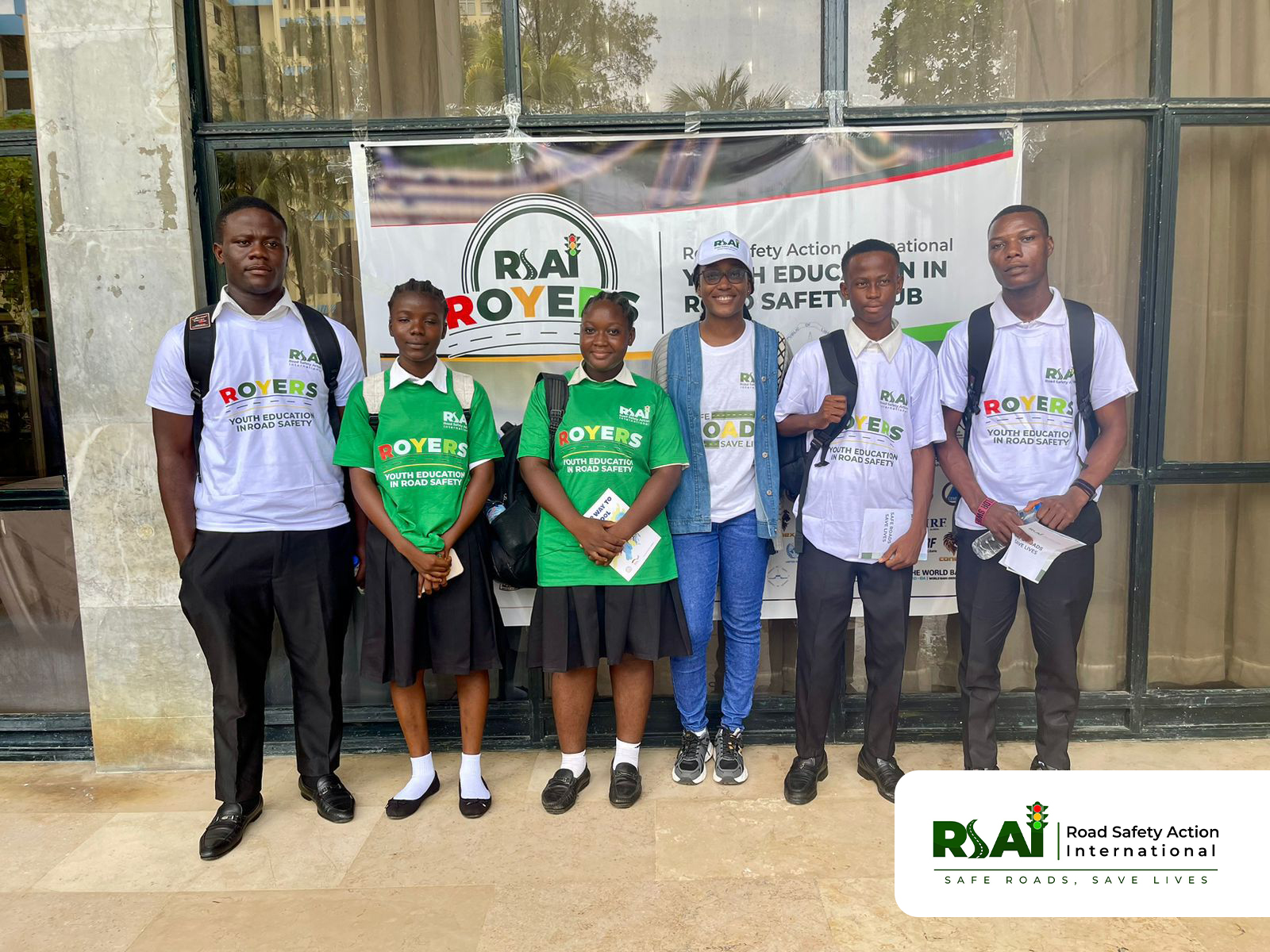
The consequences are significant. Children and youth face risks as pedestrians crossing uncontrolled roads, as passengers in overloaded vehicles, and as young motorcycle riders without helmets or basic traffic knowledge. Beyond the physical risk, the absence of road safety education in schools means that an entire generation is growing up without the knowledge, skills, or attitude to behave safely on the road — or to demand safer roads from those in authority.
Road Safety Action International (RSAI) developed the ROYERS Programme — RSAI Youth Engagement on Road Safety — to close this gap. ROYERS is a structured, school-based programme that brings road safety education directly into secondary schools, establishes student-led road safety clubs, develops youth as peer advocates, and builds a generation of informed, safety-conscious young road users across West Africa.
When young people understand road safety, they do not just protect themselves — they become advocates who change the behaviour of their families, peers, and communities.
2. Project Objectives
The ROYERS Programme is guided by the following core objectives:
- To establish functioning ROYERS road safety clubs in selected secondary schools across Liberia, Sierra Leone, and The Gambia, providing a structured platform for youth road safety engagement.
- To deliver structured road safety education sessions to secondary school students, covering key risk factors including pedestrian safety, speeding, helmet use, seatbelts, and safe road crossing practices.
- To develop youth leaders and peer advocates who can champion road safety within their schools and communities through a peer-to-peer engagement model.
- To distribute road safety educational materials — including handbooks, posters, and awareness tools — to reinforce learning and extend reach beyond the classroom.
- To conduct repeated school visits and follow-up sessions that ensure sustained engagement, knowledge retention, and club activity continuity.
- To certify trained youth leaders and ROYERS club members, recognizing their commitment and building a credentialed network of young road safety advocates.
- To strengthen RSAI's institutional relationships with Ministries of Education, school authorities, and youth-serving organizations through formal Memoranda of Understanding (MOUs).
- To contribute to national road safety targets aligned with SDG 3.6 and the UN Decade of Action for Road Safety 2021–2030 by embedding youth as active participants in the road safety movement.
3. Project Approach & Methodology
The ROYERS Programme is delivered through a structured school-based engagement model built around four core interventions and an ongoing cycle of school visits, training, and follow-up. The methodology is designed to be scalable, replicable, and institutionally anchored through school administration partnerships.
Establishment of ROYERS Clubs
RSAI works with school administrations to formally establish ROYERS road safety clubs, equipping each club with a constitution, a trained teacher-patron, elected student officers, and a structured activity calendar aligned to the school term.
Youth Leadership & Peer-to-Peer Engagement
Selected students are trained as ROYERS Youth Leaders — equipped with facilitation skills, road safety knowledge, and peer-education techniques to champion safety messages among their schoolmates and in the wider community.
Distribution of Educational Materials
RSAI distributes purpose-designed road safety materials to each participating school — including student handbooks, illustrated posters, road safety checklists, and visual aids that reinforce key safety messages beyond structured sessions.
Repeated School Visits & Follow-Up
Unlike one-off awareness events, ROYERS is built on a model of repeated engagement. RSAI programme staff conduct regular school visits to monitor club activity, deliver refresher sessions, assess knowledge retention, and address emerging road safety issues.
Training is delivered across three structured phases:
4. Project Organization & Staffing
The ROYERS Programme is managed within RSAI's national programme structure, coordinated by country-level teams with support from the RSAI Programme Management Unit. Key roles are as follows:
| Role | Responsibility | Location |
|---|---|---|
| Programme Director | Strategic oversight, donor reporting, and stakeholder engagement at national level | Regional / RSAI HQ |
| Country Coordinator | In-country implementation, school engagement, MOU coordination, and scheduling | Liberia / Sierra Leone / The Gambia |
| ROYERS Programme Officer | Lead facilitator for school visits, club formation, training sessions, and youth leader development | Each programme country |
| School Liaison Officer | Day-to-day coordination with school administrations, teacher-patrons, and club officers | Each programme country |
| M&E Officer | Pre/post knowledge assessments, school visit reports, data collection, and outcome tracking | Each programme country |
| Communications Officer | Programme documentation, photography, social media updates, and visibility reporting | Regional support |
| Teacher-Patron (School-Based) | In-school champion for the ROYERS club; coordinates student activities between RSAI visits | Each participating school |
RSAI formalizes school engagement through Memoranda of Understanding (MOUs) signed with each participating school and, where applicable, with the relevant Ministry of Education, to ensure institutional buy-in and programme continuity.
5. Project Schedule
The ROYERS Programme operates on a 12-month school-aligned implementation cycle, with activities timed to school terms and academic calendars in each country.
| Activity | Month 1–2 | Month 3–4 | Month 5–7 | Month 8–9 | Month 10–12 |
|---|---|---|---|---|---|
| School mapping, outreach & MOU signing | ✔ | ||||
| Curriculum & materials development / printing | ✔ | ✔ | |||
| Phase 1 — Club formation & school orientation | ✔ | ||||
| Phase 2 — Structured training & youth leader development | ✔ | ||||
| Distribution of road safety educational materials | ✔ | ||||
| Repeated school visits & peer engagement activities | ✔ | ✔ | |||
| Phase 3 — Assessment, certification & club events | ✔ | ||||
| Monitoring, data collection & mid-term review | ✔ | ✔ | |||
| Final evaluation, reporting & documentation | ✔ | ||||
| Knowledge sharing & programme visibility events | ✔ |
Key Activities & 2026 Targets
Indicative activities and targets for the 2026 programme cycle include:
Specific numerical targets will be defined in the Programme Activity Matrix (Annex A) and aligned with available resources and confirmed school partnerships in each country.
6. Project Log Frame — Outcomes, Outputs & Impacts
The logical framework below maps the ROYERS Programme's intended results from activities through to long-term impact:
| Level | Statement | Indicators | Means of Verification |
|---|---|---|---|
| Impact | Reduced road injuries and fatalities among young people and school-age children across West Africa | % change in road crash incidents involving young people in target areas over 3–5 years | National crash databases; school safety incident reports; government road safety data |
| Outcome 1 | Improved road safety knowledge, attitudes, and behaviour among secondary school students in programme schools | % of students demonstrating improved knowledge scores in post-training assessments compared to baseline | Pre/post knowledge assessment reports; trainer observation records |
| Outcome 2 | Active, school-based ROYERS clubs functioning as platforms for sustained youth road safety advocacy | Number of ROYERS clubs active and conducting regular activities at end of programme cycle | Club activity logs; school visit reports; teacher-patron records |
| Outcome 3 | Strengthened institutional partnerships between RSAI and schools, education authorities, and government bodies | Number of MOUs signed and active; number of government education partners engaged | MOU documentation; stakeholder engagement log; correspondence records |
| Output 1 | ROYERS clubs established and operational in selected secondary schools | Number of clubs formed per country; number of schools with active teacher-patrons | Club formation records; school visit reports; MOU log |
| Output 2 | Structured road safety training sessions delivered to secondary school students | Number of sessions conducted; number of students reached per school per country | Attendance registers; session reports; facilitator notes |
| Output 3 | Youth leaders trained, equipped, and certified as ROYERS peer advocates | Number of youth leaders trained and certified per country | Training records; certificate register; post-training assessment results |
| Output 4 | Road safety educational materials distributed to participating schools | Number of materials produced and distributed; number of schools receiving materials | Distribution records; photographic documentation; school acknowledgement forms |
| Output 5 | Monitoring, evaluation, and reporting system established and operational | M&E framework in place; quarterly reports submitted on schedule | M&E reports; progress updates to stakeholders and donors |
| Activity 1 | Conduct school mapping, outreach, and MOU signing | Schools identified, visited, and MOUs signed per country | Outreach reports; signed MOU documents |
| Activity 2 | Develop and print road safety curriculum and educational materials | Materials produced and approved per country | Curriculum documentation; printing records |
| Activity 3 | Conduct Phase 1 — Club formation and school orientation | Clubs established; orientation sessions held | Session reports; club formation records |
| Activity 4 | Deliver Phase 2 — Structured training and youth leader development | Sessions conducted; youth leaders identified and trained | Training reports; attendance registers |
| Activity 5 | Conduct repeated school visits and peer engagement activities | Number of follow-up visits per school per cycle | School visit logs; activity reports |
| Activity 6 | Conduct Phase 3 — Assessment, certification, and end-of-cycle events | Youth leaders assessed and certified; celebration events held | Certificate log; event reports; photographic documentation |
| Activity 7 | Monitor, document, and report on programme outcomes | Reports submitted quarterly; final evaluation completed | M&E reports; donor and stakeholder reports |
Our Commitment
Every school club established is a safe space for young people to learn and lead.
Every youth leader certified is a voice for road safety in their community.
Every child who understands the road is a life better protected.
ROYERS is not a one-day visit to a school.
It is a sustained movement that puts young people at the heart of road safety change.
Partner With Us
We welcome partnerships with organizations committed to youth empowerment and safer roads:
Together, we can build a generation that demands — and models — road safety as a fundamental right.