
1. Project Introduction — Background & Problem Statement
Government ministries and public institutions across West Africa operate extensive vehicle fleets, yet the drivers responsible for these assets are frequently undertrained, inadequately supervised, and unaware of key road safety principles. In Liberia, Sierra Leone, and The Gambia, public institution drivers operate under high-pressure conditions — navigating congested urban corridors, responding to institutional demands, and often driving without formal safety certification.
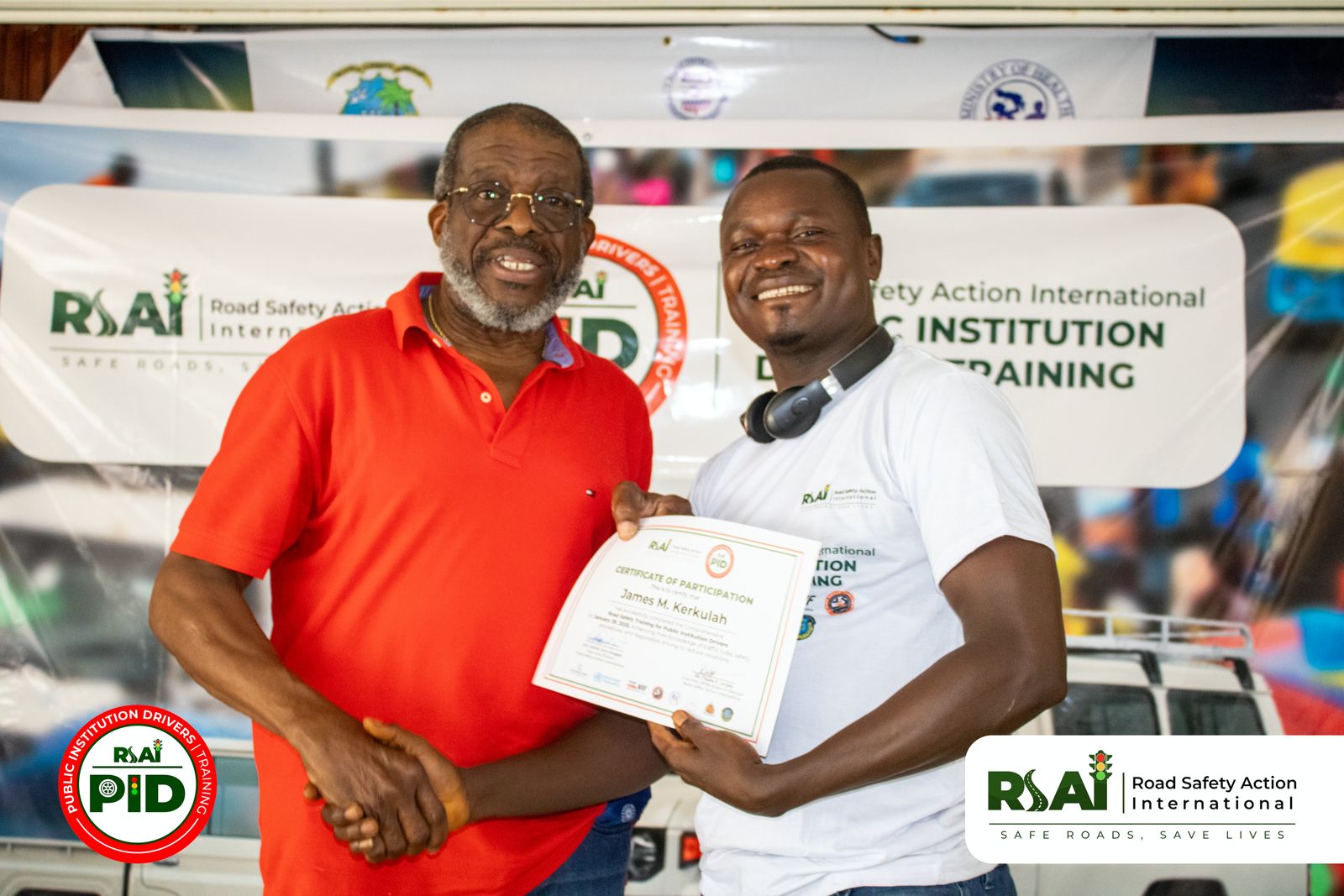
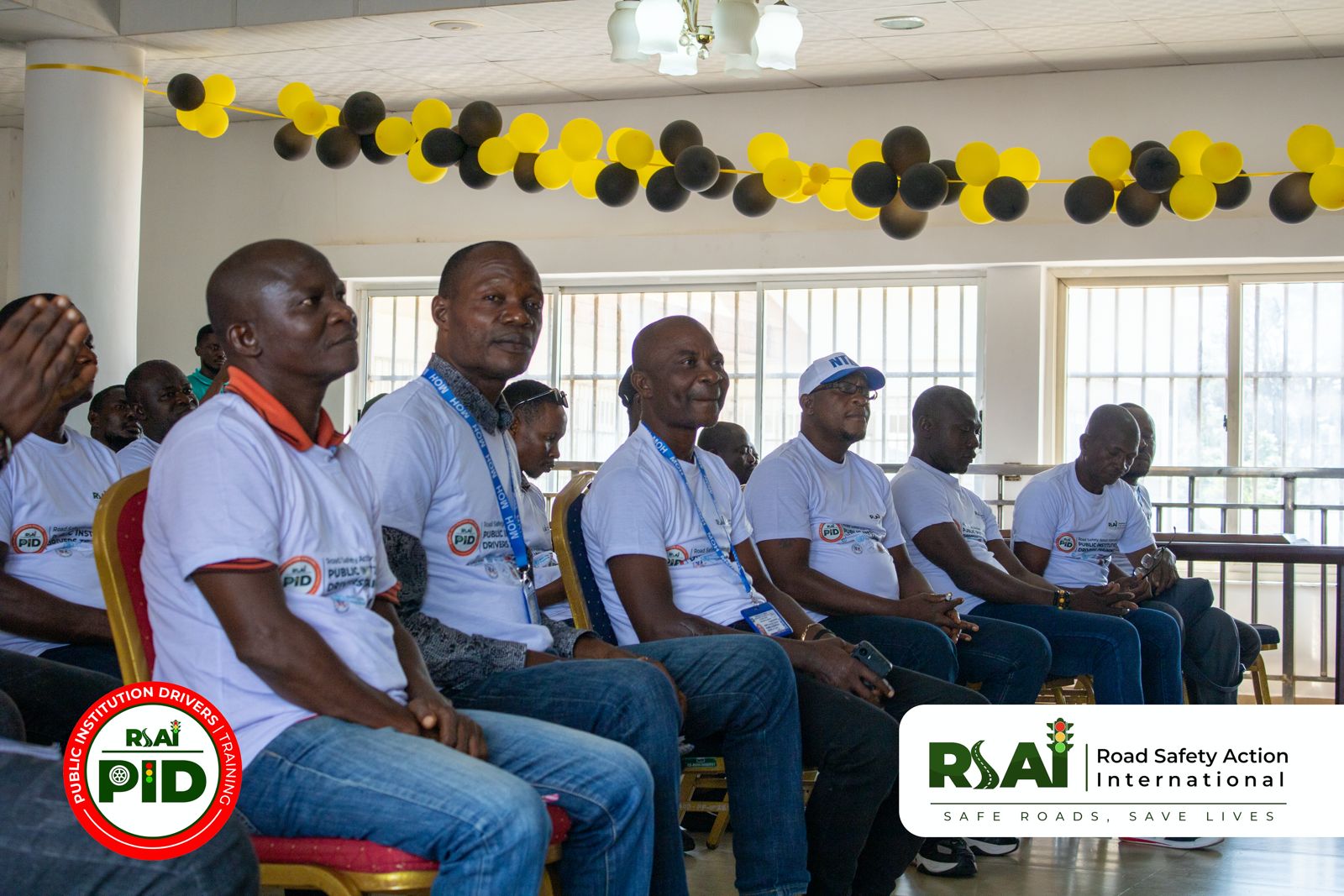
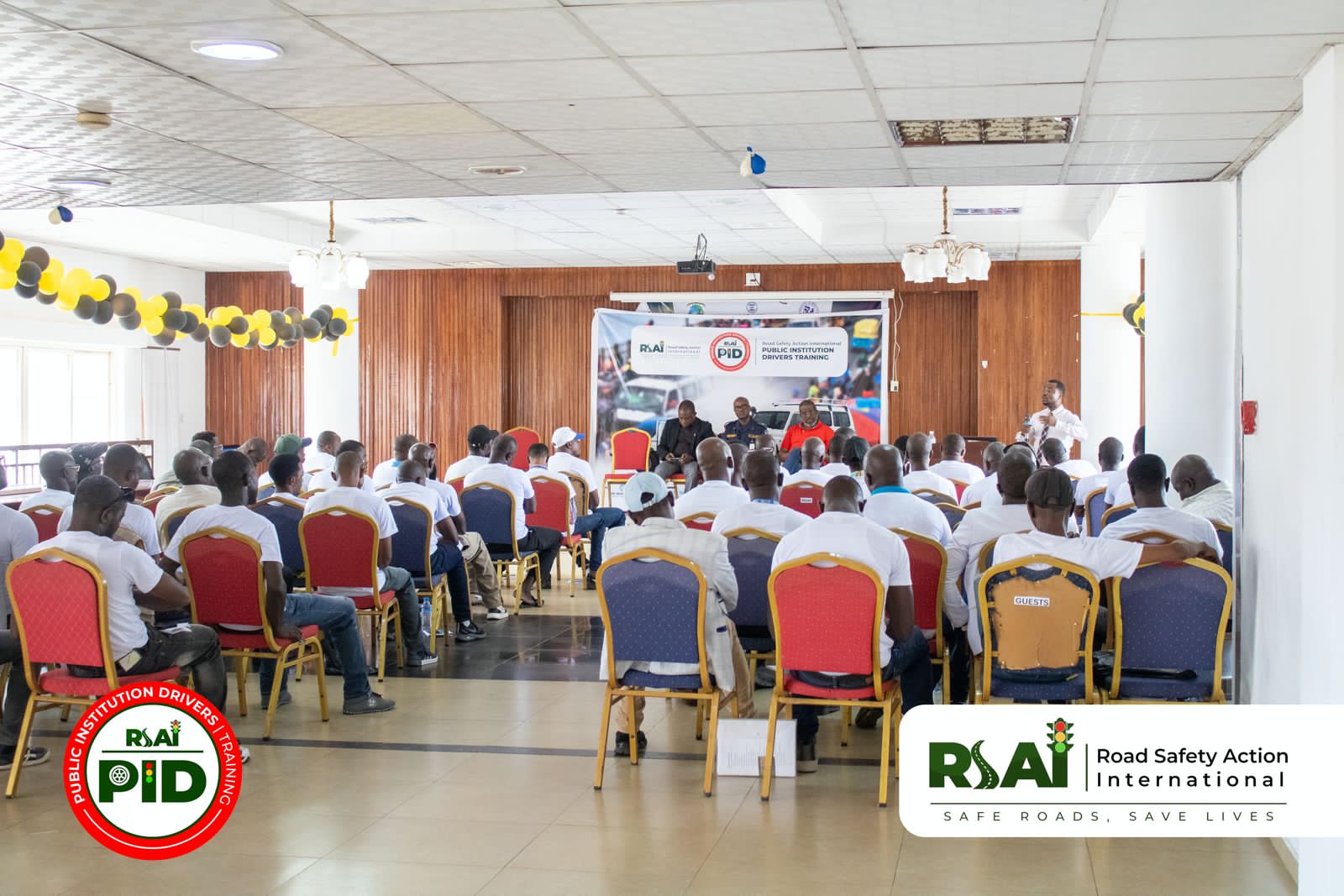
Road crashes involving government vehicles represent not only a public safety risk but also a financial burden on state resources. Vehicle damage, medical costs, and loss of life associated with preventable crashes divert funds away from core public services. Yet most public institutions lack structured driver orientation programmes, internal road safety policies, or mechanisms for performance tracking and accountability.
The Public Institutional Driver (PID) Training Programme was developed by Road Safety Action International (RSAI) to address this critical gap. By delivering targeted, evidence-based training to government drivers, the programme seeks to reduce crash risk within public fleets, promote professional conduct, and embed a culture of safety within public institutions across the region.
A trained public institution driver is not just a safer operator — they are a visible ambassador for road safety in every community they serve.
2. Project Objectives
The Public Institutional Driver Training Programme is guided by the following core objectives:
- To train government and public institution drivers in defensive driving techniques, road traffic laws, and hazard recognition to reduce crash risk.
- To promote professional conduct, ethics, and discipline among public institution drivers in their capacity as public servants.
- To strengthen vehicle maintenance awareness, pre-trip inspection practices, and basic emergency response capabilities.
- To build institutional governance frameworks for fleet management, driver accountability, and compliance with road safety policies.
- To develop and deliver structured training modules that are replicable and scalable across multiple ministries and agencies.
- To establish a monitoring and performance evaluation system that tracks driver behaviour change, crash incidents, and programme outcomes.
- To foster inter-institutional collaboration and stakeholder engagement around road safety responsibility within government.
3. Project Approach & Methodology
The PID Training Programme is delivered through a structured, multi-phase methodology that combines classroom instruction, practical field exercises, and ongoing mentorship. Our approach is grounded in the following principles:
Training is delivered in three phases:
- Phase 1 — Classroom & Theory: Traffic laws, defensive driving principles, road awareness, hazard recognition, and emergency response fundamentals.
- Phase 2 — Practical & Field Exercises: Vehicle inspection, pre-trip checks, practical manoeuvring, and route simulation under supervision.
- Phase 3 — Assessment & Certification: Written and practical assessments, performance scoring, and issuance of RSAI completion certificates.
4. Project Organization & Staffing
The PID Training Programme is managed by RSAI's national programme teams in each participating country, under the overall coordination of the RSAI Programme Management Unit (PMU). The following key roles govern implementation:
| Role | Responsibility | Location |
|---|---|---|
| Programme Director | Overall strategic oversight, stakeholder engagement, and donor reporting | Regional / RSAI HQ |
| Country Coordinator | In-country implementation, scheduling, and government liaison | Liberia / Sierra Leone / The Gambia |
| Lead Trainer | Curriculum delivery, classroom and field training facilitation | Each programme country |
| Assistant Trainer | Practical exercise support, participant assistance, and materials management | Each programme country |
| M&E Officer | Pre/post assessments, data collection, performance tracking, and reporting | Each programme country |
| Finance & Admin Officer | Budget management, procurement, logistics, and financial reporting | Each programme country |
| Communications Officer | Documentation, photography, stakeholder updates, and media engagement | Regional support |
RSAI works closely with the relevant Ministries of Transport, National Road Safety Authorities, and institutional focal points in each country to coordinate participation, access training venues, and support certification processes.
5. Project Schedule
The PID Training Programme is designed as a 12-month implementation cycle, with phased delivery across the three target countries. The schedule below outlines the key activities and timelines:
| Activity | Month 1–2 | Month 3–4 | Month 5–8 | Month 9–10 | Month 11–12 |
|---|---|---|---|---|---|
| Stakeholder mapping & institutional outreach | ✔ | ||||
| Curriculum finalization & training module development | ✔ | ✔ | |||
| Procurement of materials & training resources | ✔ | ||||
| Phase 1 Training (Classroom & Theory) | ✔ | ||||
| Phase 2 Training (Practical & Field) | ✔ | ||||
| Assessment & Certification | ✔ | ||||
| Monitoring, data collection & mid-term review | ✔ | ✔ | |||
| Stakeholder reporting & final evaluation | ✔ | ||||
| Documentation & knowledge sharing | ✔ |
6. Project Log Frame — Outcomes, Outputs & Impacts
The logical framework below maps the programme's intended results from activities through to long-term impact:
| Level | Statement | Indicators | Means of Verification |
|---|---|---|---|
| Impact | Reduced road crashes and fatalities involving public institution vehicles across West Africa | % reduction in crash incidents involving government vehicles over 3 years | National road crash databases; institutional fleet reports |
| Outcome 1 | Improved driving behaviour and safety competence among trained public institution drivers | % of trained drivers demonstrating improved scores in post-training assessments | Pre/post assessment reports; trainer observation records |
| Outcome 2 | Strengthened institutional fleet governance and road safety compliance within participating ministries | Number of institutions adopting internal fleet safety policies | Policy documentation; institutional focal point reports |
| Output 1 | Public institution drivers trained in defensive driving, traffic laws, vehicle inspection, and emergency response | Number of drivers trained per country per cycle | Attendance registers; training records; certificates issued |
| Output 2 | Training modules developed and delivered across all three programme countries | Number of training modules finalized; number of sessions held | Curriculum documentation; session reports |
| Output 3 | Monitoring and evaluation system established and operational | M&E framework in place; data collected and reported quarterly | M&E reports; progress updates to stakeholders |
| Output 4 | Stakeholder engagement activities conducted with ministries and road safety agencies | Number of institutional meetings and coordination sessions held | Meeting minutes; stakeholder engagement log |
| Activity 1 | Conduct stakeholder mapping and institutional outreach | Institutions identified and engaged per country | Outreach reports |
| Activity 2 | Develop and finalize training curriculum and materials | Modules produced and approved | Curriculum documentation |
| Activity 3 | Deliver classroom and practical training sessions | Sessions conducted; attendance records | Training reports; registers |
| Activity 4 | Conduct assessments and issue certifications | Number of drivers assessed and certified | Assessment records; certificate log |
| Activity 5 | Monitor, document, and report on programme performance | Reports submitted on schedule | M&E reports; donor reports |
Our Commitment
Every government driver trained is a public asset better protected.
Every ministry that adopts fleet safety governance leads by example.
Every crash prevented saves lives, resources, and public trust.
The Public Institutional Driver Training Programme is not a one-time course.
It is a systematic investment in safer public institutions and safer roads for all.
Partner With Us
We welcome partnerships with institutions committed to safer public fleets and stronger road safety governance:
Together, we can make every government vehicle on the road a symbol of safety, professionalism, and public responsibility.