
1. Project Introduction — Background & Problem Statement
1.1 Background
The Vehicle and Traffic Law (VTL) of Liberia is the primary legal instrument governing road use, vehicle registration, driver licensing, traffic control, and enforcement across the country. However, the existing law is outdated, inconsistently enforced, and inadequate to address the realities of modern road safety challenges — including the rapid growth of motorcycle and tricycle use, the emergence of new vehicle categories, rising urban congestion, and Liberia's commitment to the UN Decade of Action for Road Safety 2021–2030.
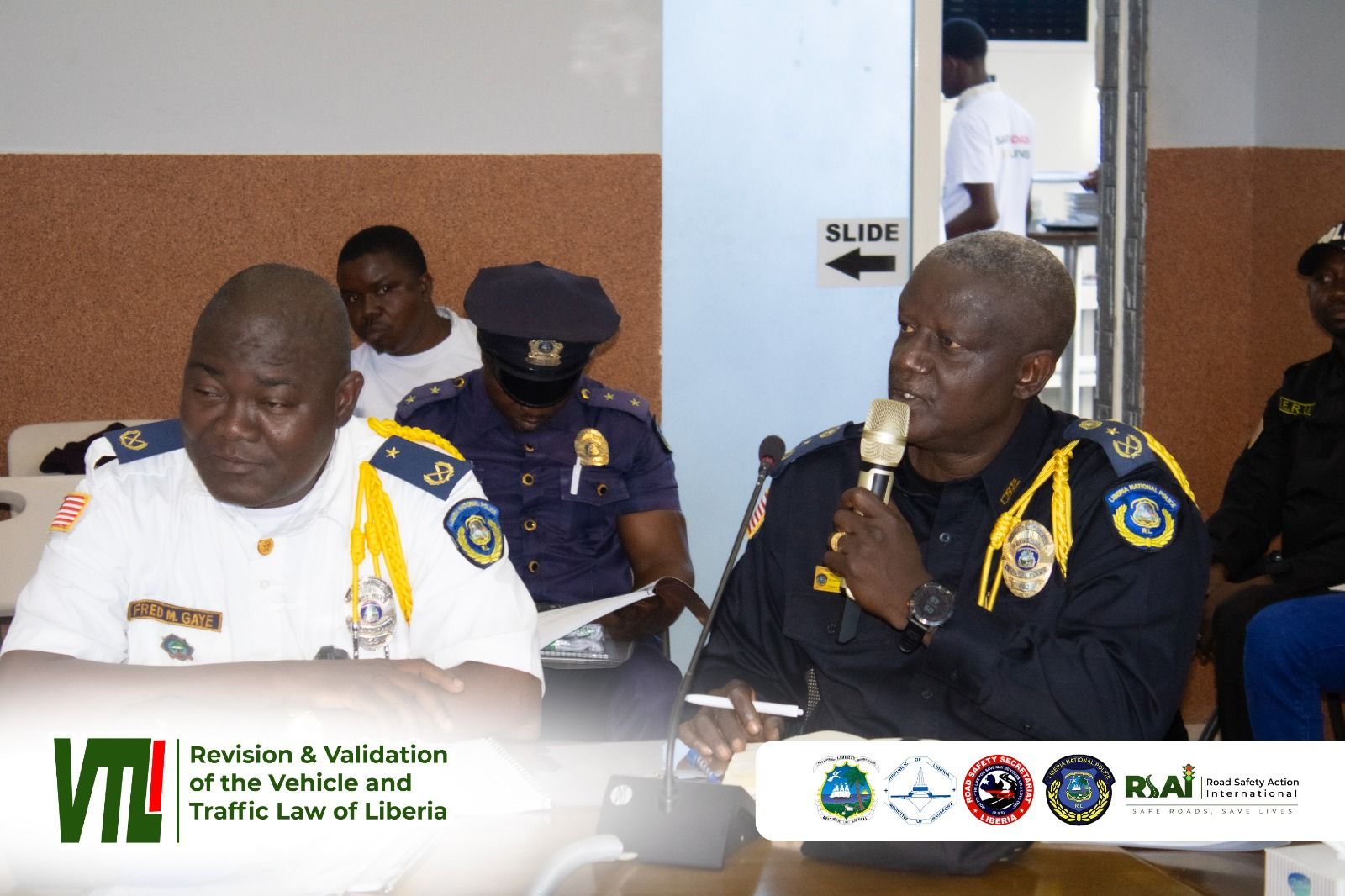
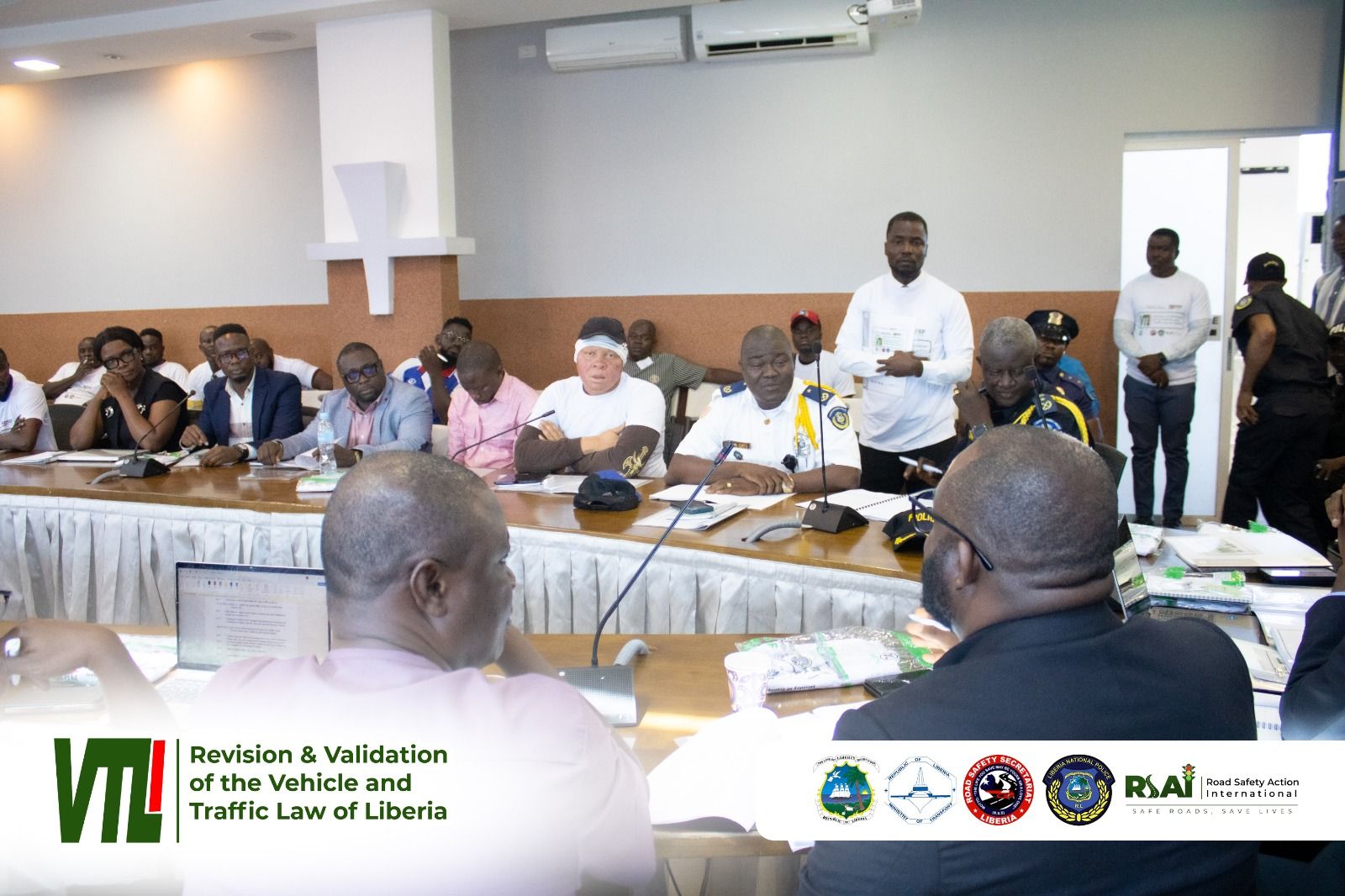
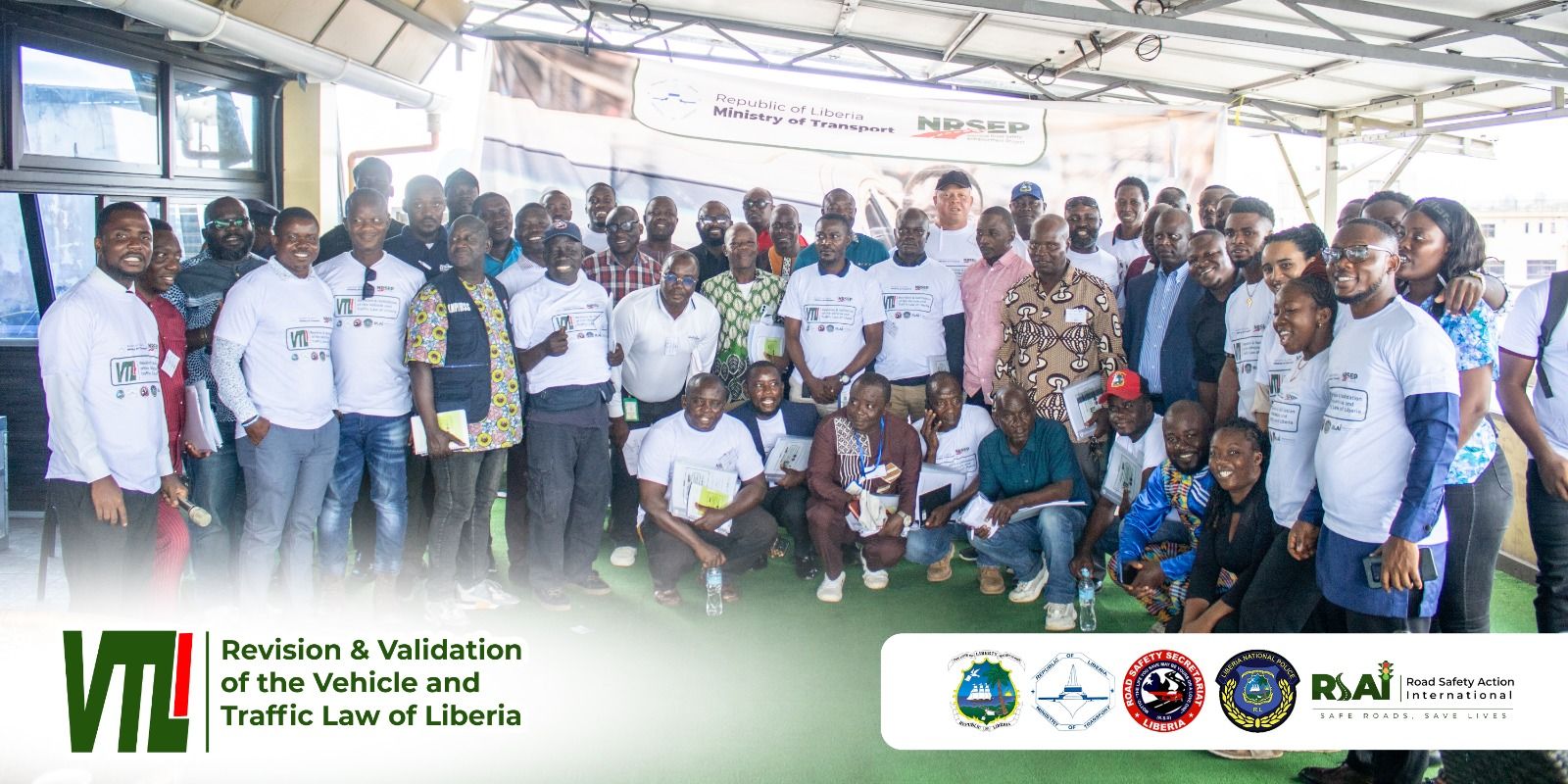
Across Liberia, enforcement of existing traffic regulations remains weak, penalties for violations are rarely applied consistently, and road users — particularly vulnerable groups such as pedestrians, cyclists, and motorcycle passengers — lack adequate legal protection. The institutional mandates of key agencies including the Liberia National Police (LNP), the Ministry of Transport (MoT), and Liberia Traffic Management (LTM) are often unclear, overlapping, or underresourced, resulting in fragmented enforcement and low public compliance.
A reformed, modern, and evidence-based Vehicle and Traffic Law is not merely a legal document — it is the foundational instrument upon which road safety education, technical enforcement, vehicle standards, and institutional accountability are built.
1.2 Problem Statement
The absence of a modernized Vehicle and Traffic Law in Liberia has created a legal vacuum that undermines all other road safety efforts. Key problems include:
- An outdated legal framework that does not reflect current road user behavior, vehicle types, or international road safety standards
- Weak and inconsistent traffic enforcement due to unclear institutional mandates and insufficient enforcement tools
- Inadequate penalties for road safety violations, reducing deterrence and compliance among road users
- Insufficient protection for vulnerable road users — including pedestrians, cyclists, motorcycle passengers, and persons with disabilities
- Limited integration of data, research, and evidence into traffic regulation and enforcement policy
- Poor decentralization of traffic management, leaving enforcement concentrated in urban centers while rural roads remain largely unregulated
- Lack of environmental considerations within traffic law, including provisions related to vehicle emissions and noise standards
Without a modern, enforceable, and rights-based Vehicle and Traffic Law, road safety interventions in Liberia will continue to operate without a legal foundation — limiting their reach, authority, and long-term impact.
2. Project Objectives
The Vehicle & Traffic Law Reform project is guided by the following core objectives:
- Support the final review and validation of the revised Vehicle and Traffic Law of Liberia in collaboration with the Law Reform Commission of Liberia and key institutional stakeholders.
- Facilitate the symbolic and formal submission of the revised and validated VTL to the Ministry of Transport (MoT) for onward legislative processing.
- Advocate for and support the passage of the revised VTL through Liberia's legislative process, ensuring it becomes the operative instrument for traffic regulation and enforcement.
- Promote and support the early enforcement of the revised VTL once passed, including capacity building for enforcement agencies and public sensitization.
- Ensure the revised law adequately protects vulnerable road users — including pedestrians, motorcyclists, cyclists, children, and persons with disabilities.
- Strengthen governance, data, and accountability frameworks within the revised VTL, including provisions for accident reporting, traffic study, and evidence-based regulation.
- Clarify and strengthen the institutional mandates of the Liberia National Police, Ministry of Transport, Law Reform Commission, and Liberia Traffic Management (LTM) within the revised legal framework.
- Build public and stakeholder understanding of the revised VTL through targeted sensitization of road users, transport operators, and transport unions.
3. Project Approach & Methodology
The VTL project adopts a multi-stakeholder, evidence-based policy engagement approach that combines legal technical assistance, stakeholder convening, legislative advocacy, and public sensitization. RSAI's role is that of a technical facilitator and advocacy partner — providing the evidence, convening power, and civil society voice needed to accelerate reform.
Key Coverage Areas of the Revised VTL
The revised Vehicle and Traffic Law addresses the following thematic areas — each essential to building a modern, effective, and equitable road safety legal framework for Liberia:
Key Interventions
Final Review with the Law Reform Commission
RSAI supports the final review and validation of the revised Vehicle and Traffic Law in formal collaboration with the Law Reform Commission of Liberia, ensuring the law is technically sound, legally coherent, and aligned with international road safety standards including WHO guidelines and SDG 3.6.
Symbolic Submission to the Ministry of Transport
RSAI facilitates and participates in the formal and symbolic submission of the validated revised VTL to the Ministry of Transport — a milestone event that signals institutional commitment and triggers the legislative passage process.
Advocacy for Legislative Passage
RSAI leads and supports civil society advocacy efforts to ensure the revised VTL is passed by the Liberian legislature and enacted into law — engaging parliamentarians, government ministries, development partners, and media to maintain pressure and political will.
Support for Early Enforcement
Upon passage, RSAI works with the Liberia National Police, LTM, and MoT to support early enforcement of the revised VTL — including awareness of new provisions, guidance on enforcement tools, and public communication on penalties and rights.
4. Organization & Staffing
Implementing Organization: Road Safety Action International (RSAI)
The VTL reform project is implemented through close coordination with Liberia's key road safety and legal institutions. RSAI serves as the lead civil society technical partner throughout the reform process:
| Role / Institution | Function in VTL Reform |
|---|---|
| RSAI Programme Director | Strategic oversight, stakeholder engagement, donor reporting, and high-level advocacy coordination |
| RSAI Policy & Legal Officer | Technical review support, legal analysis, stakeholder consultation facilitation, and legislative tracking |
| Law Reform Commission of Liberia | Lead institution for legal drafting, review, and validation of the revised VTL |
| Ministry of Transport (MoT) | Primary government recipient of the revised VTL; responsible for legislative submission and policy coordination |
| Liberia National Police (LNP) | Key enforcement partner; input provider on enforcement tools, penalty structures, and operational capacity requirements |
| Liberia Traffic Management (LTM) | Technical input on traffic control, decentralization, and operational enforcement mechanisms |
| Transport Unions & Associations | Consultation participants representing commercial transport operators; key audience for sensitization on revised law provisions |
| Development Partners | Provide financing, technical support, and advocacy leverage for VTL passage and implementation |
| M&E Officer | Track reform milestones, document stakeholder engagement, and report on programme progress and outcomes |
5. Project Schedule
The VTL reform project follows the legislative calendar and institutional processes of the Government of Liberia. The indicative schedule below maps RSAI's engagement across the key reform milestones:
6. Monitoring, Evaluation & Learning (MEL)
RSAI tracks the VTL reform project against the following key indicators and uses a combination of documentary evidence, stakeholder reporting, and field observation:
7. Project Log Frame — Outputs, Outcomes & Impact
| Level | Statement | Indicators | Means of Verification |
|---|---|---|---|
| Impact | Reduced road traffic crashes, injuries, and fatalities in Liberia through a modern, enforceable, and rights-based legal framework for road use and traffic management | % change in road fatalities and serious injuries over 3–5 years post-enactment; % improvement in enforcement activity and compliance rates | National crash databases; LNP enforcement records; WHO road safety data; MoT annual reports |
| Outcome 1 | A revised, modernized, and evidence-based Vehicle and Traffic Law enacted and operational in Liberia | VTL passed by legislature and signed into law; revised law publicly available and disseminated to enforcement agencies | Official Gazette; MoT records; Law Reform Commission documentation |
| Outcome 2 | Strengthened traffic enforcement capacity and compliance among road users, transport operators, and institutions | % of LNP and LTM officers trained on revised VTL provisions; observed increase in enforcement actions post-passage | LNP training records; LTM enforcement logs; RSAI field observation reports |
| Outcome 3 | Improved awareness and understanding of the revised VTL among road users, transport operators, and the general public | % of sensitization target groups demonstrating knowledge of key VTL provisions in post-campaign assessments | Sensitization reports; pre/post awareness surveys; media coverage records |
| Output 1 | Revised VTL reviewed, validated, and submitted to the Ministry of Transport | Final review completed; validation signed off; formal submission to MoT conducted | Law Reform Commission records; submission documentation; RSAI engagement reports |
| Output 2 | Legislative advocacy campaign conducted to support VTL passage | Number of advocacy engagements with parliament, MoT, and development partners; advocacy materials produced | Meeting records; advocacy briefs; media reports; stakeholder engagement log |
| Output 3 | Public sensitization campaign on revised VTL delivered to road users and transport operators | Number of people reached; number of sensitization events conducted; materials distributed | Event reports; distribution records; media reach data |
| Output 4 | Enforcement readiness support provided to LNP, LTM, and MoT ahead of and following VTL passage | Number of enforcement readiness sessions conducted; number of officials briefed on revised law provisions | Training records; briefing documentation; institutional feedback |
| Output 5 | MEL system operational and tracking VTL reform milestones and outcomes | Reports submitted on schedule; milestones documented and shared with stakeholders | MEL reports; programme progress updates; donor reports |
| Activity 1 | Conduct stakeholder mapping and establish coordination mechanisms with Law Reform Commission and MoT | Mapping completed; coordination structures agreed | Stakeholder maps; meeting minutes; coordination agreements |
| Activity 2 | Contribute technical and evidence inputs to the final VTL review process | Technical submissions made; consultations participated in | Submission records; consultation reports |
| Activity 3 | Facilitate and participate in the symbolic submission of the revised VTL to MoT | Submission event held; documented | Event records; photographic documentation; media reports |
| Activity 4 | Conduct legislative advocacy engagements for VTL passage | Advocacy meetings held; materials produced and distributed | Advocacy reports; meeting records |
| Activity 5 | Deliver public sensitization campaign on revised VTL | Campaign events held; people reached | Event reports; media records; attendance registers |
| Activity 6 | Support enforcement readiness and monitor early compliance | Enforcement briefings held; compliance data collected | Briefing records; field observation reports; MEL data |
8. Conclusion
Every provision in the revised VTL is a protection extended to a road user who had none before.
Every penalty clause enforced is a deterrent that saves lives on Liberia's roads.
Every institution with a clear mandate is a stronger pillar of the road safety system.
The Vehicle & Traffic Law Reform is not just a legislative exercise —
it is the legal foundation upon which every road safety intervention in Liberia stands.
RSAI is committed to seeing it reviewed, passed, enforced, and upheld for every road user in Liberia.
Partner With Us
We welcome partnerships with institutions committed to strengthening Liberia's road safety legal framework:
Together, we can give Liberia the road safety law it deserves — modern, enforceable, and built to protect every road user.