
1. Project Introduction — Background & Problem Statement
1.1 Background
Roads are the backbone of economic activity and social connectivity in Liberia — yet the country's road network suffers from chronic underfunding, inadequate maintenance, and a growing infrastructure deficit that undermines both economic development and road safety. Government allocations for road maintenance are insufficient, donor financing is inconsistent, and the absence of a structured, sustainable road financing mechanism leaves the majority of Liberia's road assets deteriorating faster than they can be repaired.
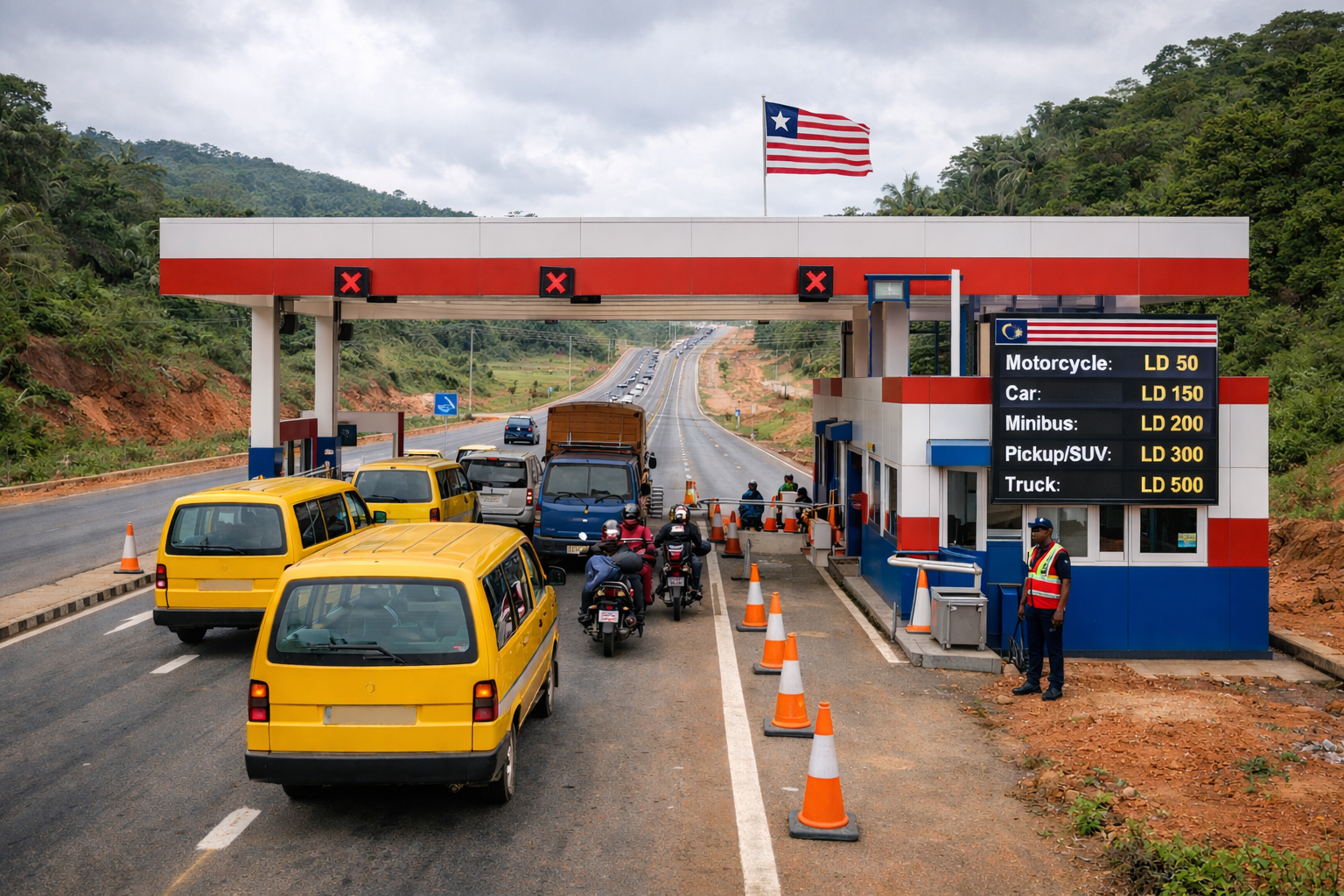
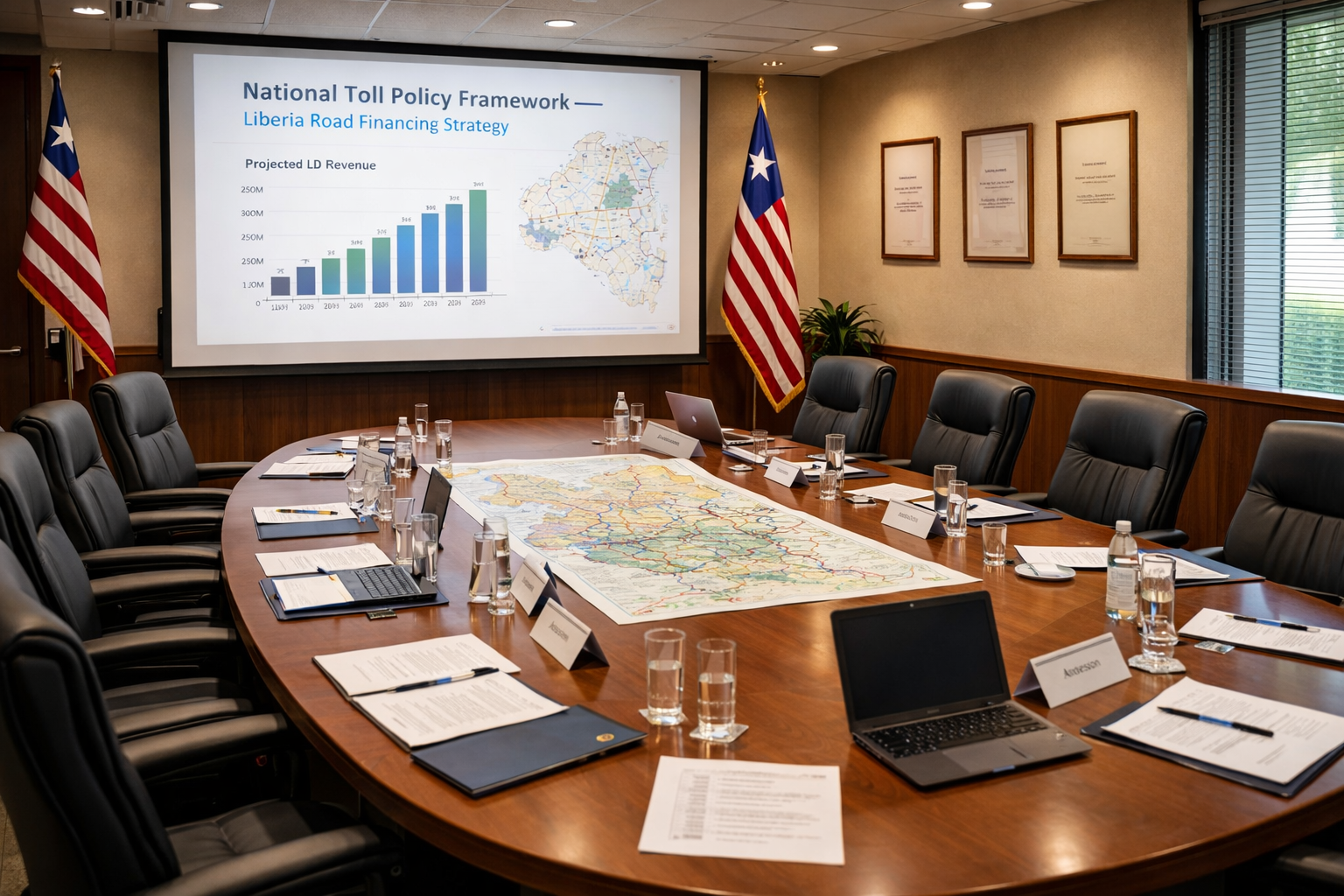
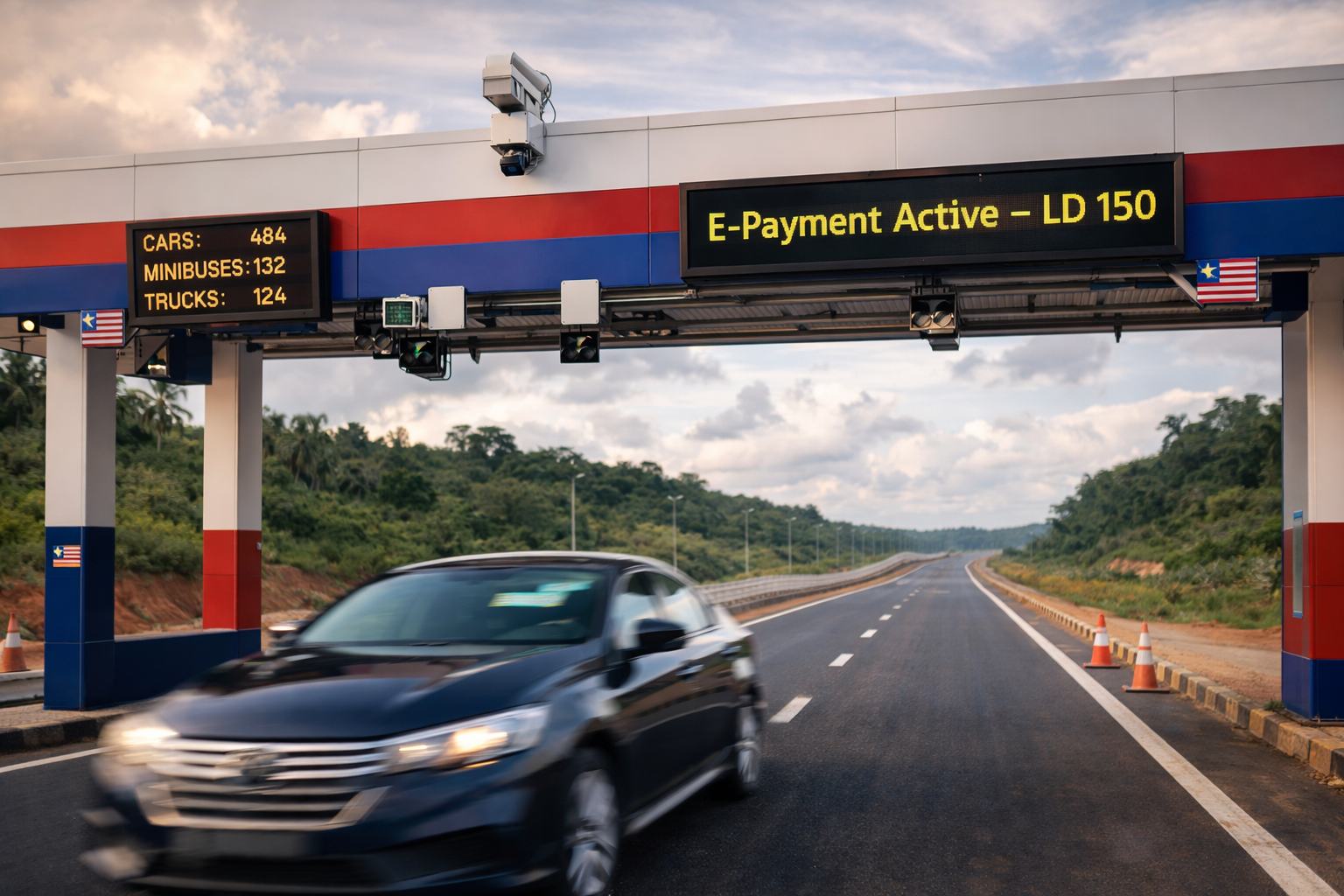
Across the sub-region, countries that have established structured toll frameworks — with transparent revenue collection, clear cost-recovery mechanisms, and ring-fenced allocation to road maintenance and safety — have demonstrated measurably better road asset management outcomes. The user-pay principle, when implemented equitably and transparently, creates a direct and sustainable link between road use, revenue generation, and reinvestment in road safety and maintenance.
In Liberia, the opportunity to establish a credible toll policy and sustainable road financing framework is significant — but realizing it requires careful attention to demand analysis, pricing equity, public acceptance, institutional capacity, anti-corruption safeguards, and the integration of social and environmental considerations into the tolling system design.
1.2 Problem Statement
The absence of a structured toll policy and sustainable road financing framework in Liberia has resulted in:
- Chronic underfunding of road maintenance, leading to accelerating deterioration of road assets and rising crash risk from poor road surface conditions
- No standardized toll framework, regulatory structure, or collection system to generate and ring-fence revenue for road safety and maintenance investment
- Limited application of the user-pay principle — meaning road users benefit from infrastructure without contributing financially to its maintenance and improvement
- Absence of traffic demand analysis, origin-destination surveys, and willingness-to-pay studies to inform evidence-based toll pricing decisions
- Weak Public Private Partnership (PPP) frameworks for road financing, limiting private sector participation in infrastructure investment and maintenance
- No electronic tolling or digitalized collection systems, leaving manual collection vulnerable to revenue leakage, corruption, and inefficiency
- Insufficient integration of equity, affordability, and social safeguards into road financing policy — risking disproportionate burden on low-income road users
- Lack of data privacy, cybersecurity, and anti-corruption measures in road financing systems — undermining public trust and investor confidence
A road without sustainable financing is a road without a future. Toll policy is not just a revenue tool — it is the financial architecture that makes safer, better-maintained roads possible.
2. Project Objectives
- Develop a national toll policy and regulatory framework for Liberia, defining the legal basis, institutional mandates, revenue allocation principles, and enforcement mechanisms for tolling on public roads.
- Conduct traffic demand analysis, origin-destination surveys, and willingness-to-pay studies to generate the evidence base needed for equitable and economically viable toll pricing decisions.
- Design a toll collection system — including electronic payment, digitalization, weigh bridge integration, and registration bar mechanisms — that maximizes revenue efficiency, minimizes leakage, and supports full cost recovery.
- Develop a PPP framework and advisory service for road financing, attracting private sector participation in infrastructure investment through bankable agreements, guarantees, bonds, and risk-sharing arrangements.
- Integrate safety, social safeguards, equity, and environmental compliance into the tolling system design — ensuring the user-pay mechanism does not disproportionately burden vulnerable or low-income road users.
- Establish anti-corruption measures, data privacy protections, and cybersecurity standards for electronic toll data collection and management systems.
- Build institutional capacity for toll system operation, monitoring, revenue management, and dispute resolution among implementing agencies.
- Support public acceptance and stakeholder engagement — communicating the benefits of the toll system, its revenue allocation, and its contribution to road safety and maintenance outcomes.
- Establish a monitoring and evaluation framework tracking revenue generation, cost recovery, return on investment (ROI), rate of return (ROR), and traffic performance against projections.
3. Project Approach & Methodology
The TP project adopts an integrated policy, economics, and systems design approach — combining legal framework development, economic and traffic analysis, technical systems design, PPP advisory, and stakeholder engagement. RSAI acts as a technical facilitator and policy advisory partner, drawing on international tolling best practice and adapting it to Liberia's fiscal, institutional, and social context.
Core Financing Principles
The Toll Policy & Sustainable Road Financing framework is designed around six core principles that ensure the system is credible, equitable, and bankable:
User Pay
Those who use the road contribute to its maintenance and improvement — creating a direct and sustainable financing link.
Transparency
All revenue collection, allocation, and expenditure is publicly reported — building trust and supporting anti-corruption accountability.
Equity & Affordability
Pricing structures and social safeguards ensure tolling does not disproportionately burden low-income road users or essential transport services.
Cost Recovery
Toll revenues are structured to achieve full cost recovery for road maintenance and safety investment over defined asset management cycles.
Data Security
Electronic toll systems are designed with cybersecurity standards, data privacy protections, and anti-corruption controls built in from the outset.
Return on Investment
PPP frameworks are structured to deliver credible ROI and rate of return for private investors, backed by performance guarantees and clear revenue-sharing models.
Key Interventions
Toll Policy & Regulatory Framework
Development of a comprehensive national toll policy and regulatory framework — covering legal authority, institutional mandates, revenue allocation rules, enforcement, and dispute resolution — providing the legal and operational foundation for sustainable road financing in Liberia.
Traffic Demand, Pricing & Willingness-to-Pay Analysis
Evidence-based traffic demand analysis, origin-destination surveys, traffic projections, and willingness-to-pay studies — generating the data needed to set toll rates that are economically viable, publicly acceptable, and equitable across all road user categories and income levels.
Safety & Social Safeguards Integration
Integration of road safety investment linkages, social safeguard provisions, equity assessments, environmental compliance requirements, and anti-corruption measures into the toll system design — ensuring the financing mechanism serves public interest and aligns with development partner safeguard standards.
PPP & Electronic Tolling Advisory
Advisory support for PPP framework development and electronic tolling system design — including model agreements, risk-sharing structures, performance bonds, digital payment infrastructure, weigh bridge integration, and cybersecurity standards to attract private investment and maximize revenue efficiency.
4. Project Organization & Staffing
Implementing Organization: Road Safety Action International (RSAI)
| Role / Institution | Function in TP Project |
|---|---|
| RSAI Programme Director | Strategic oversight, stakeholder engagement, donor reporting, and high-level policy advocacy |
| RSAI Policy & Economics Officer | Lead development of toll policy framework, economic analysis, pricing recommendations, and PPP advisory content |
| Traffic & Demand Analysis Specialists | Conduct origin-destination surveys, electronic data counts, traffic projections, and willingness-to-pay studies |
| Electronic Tolling & ICT Specialists | Design electronic toll collection systems, digital payment infrastructure, cybersecurity standards, and data management frameworks |
| PPP & Finance Advisory Specialists | Develop PPP model agreements, risk-sharing frameworks, investment return structures, bonds, and subsidy mechanisms |
| Ministry of Public Works (MPW) | Primary government partner for road asset management, maintenance funding, and infrastructure investment coordination |
| Ministry of Finance & Development Planning | Revenue allocation, fiscal policy alignment, bond issuance, and development partner coordination |
| Ministry of Transport (MoT) | Regulatory alignment, vehicle registration integration, weigh bridge coordination, and transport operator engagement |
| Transport Unions & Operators | Key stakeholder engagement participants; primary audience for public acceptance communication on toll pricing and safeguards |
| Private Sector & Development Partners | Potential PPP investors, technical assistance providers, and financing partners for toll infrastructure investment |
| M&E Officer | Track revenue generation, traffic performance, cost recovery, and implementation milestones — reporting to stakeholders and donors |
5. Project Schedule
The TP project is implemented in five phases, progressing from analysis and policy development through to system design, PPP advisory, and full implementation support:
6. Monitoring, Evaluation & Learning (MEL)
7. Project Log Frame — Outputs, Outcomes & Impact
| Level | Statement | Indicators | Means of Verification |
|---|---|---|---|
| Impact | Sustainable, transparent, and equitable road financing in Liberia enabling consistent investment in road maintenance and safety — contributing to reduced road crashes, better infrastructure, and stronger economic connectivity | % improvement in road condition indices on tolled corridors; % increase in road maintenance funding from toll revenues; correlation with reduced crash rates on maintained roads | MPW road condition surveys; Ministry of Finance revenue reports; crash databases; development partner assessments |
| Outcome 1 | A functional national toll policy and regulatory framework operational in Liberia, providing the legal and institutional basis for sustainable road financing | Toll policy framework adopted; regulatory instruments in force; toll collection system operational on at least one national corridor | Government gazette; MPW and MoT records; toll system operational reports |
| Outcome 2 | Sustainable toll revenue generated and ring-fenced for road maintenance and safety investment, achieving defined cost recovery targets | Annual toll revenue generated vs. projections; % of maintenance costs covered by toll revenue; ROI achieved against PPP targets | Revenue collection records; Ministry of Finance reports; PPP performance audits |
| Outcome 3 | Private sector participation in road financing secured through credible PPP frameworks, reducing dependence on government budget and donor financing | Value of PPP investment attracted; number of PPP agreements signed; infrastructure improvements delivered through private financing | PPP agreement documentation; investment records; MPW infrastructure reports |
| Output 1 | National Toll Policy and Regulatory Framework developed and adopted | Framework documented, consulted upon, and formally adopted | Policy document; government adoption records; stakeholder consultation reports |
| Output 2 | Evidence base for toll pricing developed through traffic demand analysis and economic studies | Origin-destination surveys completed; traffic projections produced; willingness-to-pay study finalized | Survey reports; traffic study documentation; economic analysis reports |
| Output 3 | Electronic toll collection system designed and advisory provided for implementation | System design completed; electronic payment, weigh bridge, and cybersecurity specifications finalized | Technical design documents; advisory reports; system specifications |
| Output 4 | PPP framework and model agreements developed for road financing | PPP framework documented; model agreements, risk-sharing, and return structures finalized | PPP framework document; model agreement templates; investor advisory records |
| Output 5 | Stakeholder engagement and public acceptance campaign delivered | Number of engagement events conducted; road users and operators reached; public awareness levels measured | Event reports; attendance records; awareness survey results |
| Output 6 | MEL system operational and tracking revenue, traffic performance, and implementation outcomes | Reports submitted on schedule; revenue and traffic data collected and reported quarterly | MEL reports; revenue records; donor and government progress reports |
| Activity 1 | Conduct baseline assessment and stakeholder mapping | Assessment and mapping completed | Baseline report; stakeholder map |
| Activity 2 | Commission and oversee traffic demand analysis and economic studies | Studies commissioned and completed | Study reports; data sets; economic analysis documentation |
| Activity 3 | Develop and consult on national Toll Policy Framework | Framework drafted, consulted, and submitted | Policy document; consultation records; submission documentation |
| Activity 4 | Provide electronic tolling system design advisory | Advisory completed; specifications finalized | Technical advisory reports; system design documents |
| Activity 5 | Develop PPP framework and model investment agreements | PPP framework and model agreements produced | Framework document; model agreement templates |
| Activity 6 | Conduct stakeholder engagement and public communication campaigns | Engagement events held; people reached | Event reports; media records; awareness data |
| Activity 7 | Monitor implementation, revenue performance, and report on outcomes | Reports submitted quarterly; final evaluation completed | MEL reports; revenue records; government and donor reports |
8. Conclusion
Every toll collected transparently is a contribution to a road that lasts longer and kills fewer people.
Every PPP agreement signed is a private investment in public safety and economic connectivity.
Every origin-destination survey completed is a pricing decision grounded in evidence, not assumption.
Toll Policy & Sustainable Road Financing is not just about revenue —
it is about building the financial architecture that makes road safety permanent.
RSAI is committed to making Liberia's roads not only safer, but sustainably funded for every generation that travels them.
Partner With Us
We welcome partnerships with institutions committed to sustainable road financing, infrastructure investment, and safer roads in Liberia:
Together, we can build a road financing system that is transparent, equitable, bankable, and built to sustain safer roads for all users in Liberia.