
1. Project Introduction — Background & Problem Statement
1.1 Background
Effective road safety management depends on reliable, timely, and actionable data. Without accurate crash data, governments cannot identify the highest-risk locations, enforcement agencies cannot deploy resources strategically, policymakers cannot justify investment decisions, and communities cannot hold institutions accountable for road safety outcomes. Crash data is not merely a statistical record — it is the evidence backbone of every effective road safety intervention.


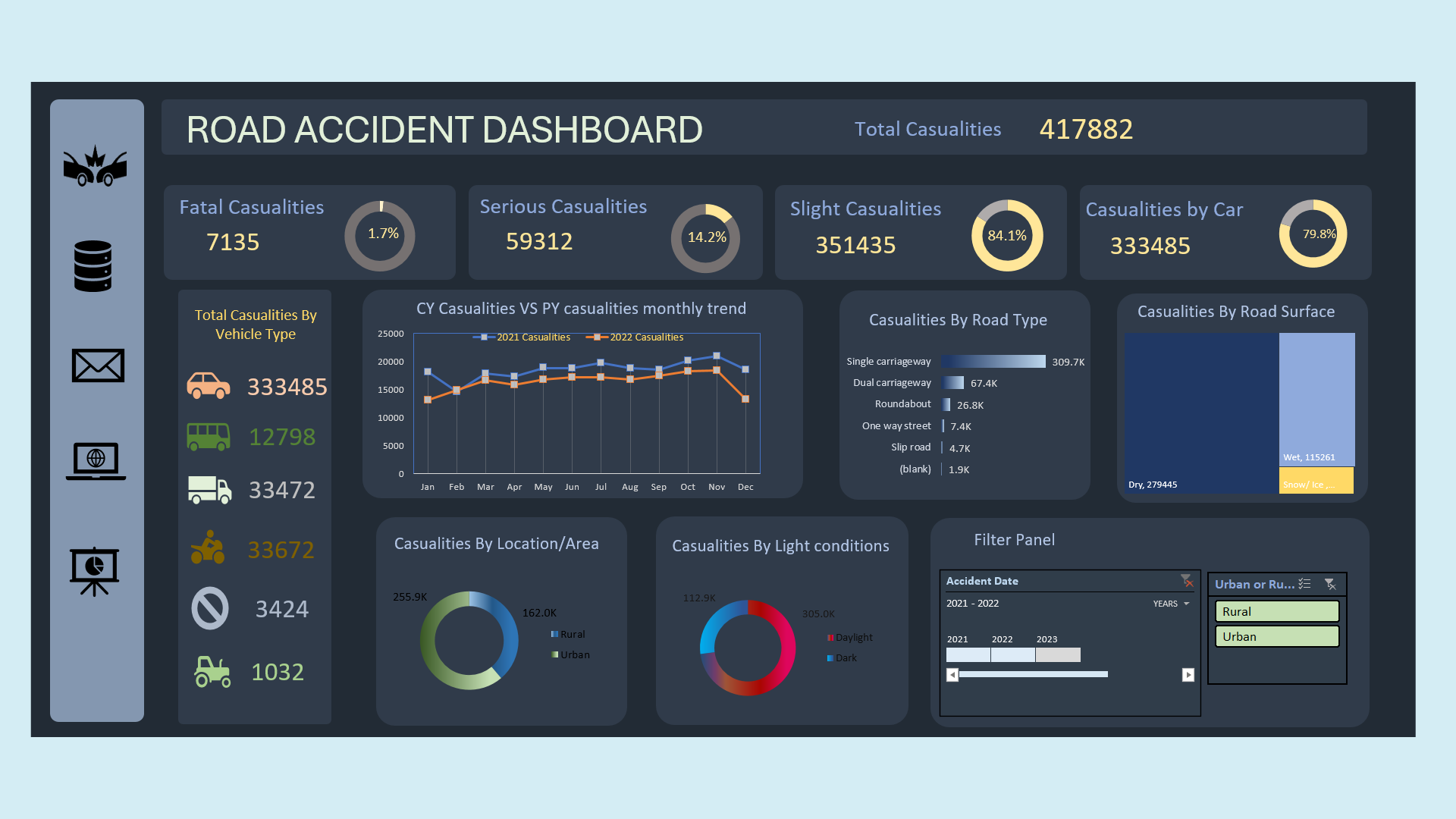
In Liberia, crash data collection remains fragmented, inconsistent, and significantly underreported. The Liberia National Police (LNP), the Ministry of Transport (MoT), health facilities, and transport agencies each collect different pieces of the crash picture — but these data streams are rarely standardized, rarely linked, and rarely translated into the policy and enforcement responses that could prevent the next crash.
Globally, countries with strong national crash data systems consistently outperform those without in reducing road fatalities. The Safe System Approach demands that decisions on enforcement priorities, infrastructure investment, legislation, and education programming be grounded in crash evidence — not assumption. The CDS project is RSAI's commitment to building that evidence infrastructure in Liberia.
1.2 Problem Statement
The current state of crash data systems in Liberia presents critical gaps that undermine the entire road safety management system:
- Crash data is collected inconsistently across agencies — with no standardized forms, definitions, variables, or recording methodologies, making cross-agency comparison impossible
- Significant underreporting of road crashes, particularly for minor injuries, motorcycle incidents, and crashes in rural and peri-urban areas outside major corridors
- No functional national crash database linking police records, hospital data, vehicle registration information, and road network data into a single accessible system
- Limited capacity among data collectors — including police officers, traffic wardens, and transport officials — in crash scene documentation, evidence preservation, and structured data recording
- Crash data, where collected, rarely reaches the analytical stage — sitting in paper records or fragmented spreadsheets without translation into reports, maps, or actionable intelligence
- No systematic multi-agency crash investigation and review process to identify contributory factors, systemic patterns, and priority intervention points
- Policy reform, enforcement deployment, and infrastructure investment decisions are made without crash data evidence — limiting their effectiveness and efficiency
You cannot manage what you do not measure. And you cannot save lives with data that is never collected, never analysed, and never acted upon.
From Crash Scene to Policy Action — The CDS Data Pipeline
The CDS project is designed to close the gap between crash occurrence and policy response across five sequential stages:
2. Project Objectives
- Standardize crash data collection methodologies across all agencies — establishing common definitions, variables, recording forms, and classification systems aligned with international standards including WHO and IRTAD guidelines.
- Develop and operationalize a national crash database linking police records, hospital data, vehicle information, and road network data into a single accessible, searchable system.
- Establish a multi-agency crash investigation and review system — bringing together LNP, MoT, health institutions, and transport agencies to jointly investigate fatal and serious crashes and identify systemic contributory factors.
- Build institutional capacity in crash data collection, analysis, and reporting among police officers, traffic wardens, transport officials, and road safety agency personnel.
- Produce regular crash data reports and analytical outputs — including crash maps, hotspot analyses, risk factor breakdowns, and trend reports — that translate data into actionable intelligence for decision-makers.
- Use crash data evidence to drive data-driven prioritization of enforcement deployments and infrastructure interventions at identified high-risk locations and corridors.
- Support the integration of crash data into policy reform processes — providing the empirical evidence base for VTL reform, road safety strategies, and investment planning.
- Strengthen data sharing, interoperability, and governance frameworks across agencies to ensure crash data is accessible, timely, and used consistently in decision-making.
3. Project Approach & Methodology
The CDS project adopts a systems-strengthening and capacity-building approach — working across institutional, technical, and human dimensions of the crash data challenge. RSAI acts as both a technical advisor and convening partner, bringing agencies together and providing the tools, training, and analytical support needed to transform fragmented data collection into a functional national crash intelligence system.
Key Interventions
Standardization of Crash Data Collection
Development and adoption of standardized crash data collection methodologies — common forms, variable definitions, severity classifications, and recording protocols — across all data-collecting agencies in Liberia, aligned with WHO and international crash data standards.
Multi-Agency Crash Investigation & Review Systems
Establishment of a structured multi-agency crash investigation and review process — bringing LNP, MoT, health institutions, and transport agencies together to jointly investigate serious crashes, identify systemic patterns, and drive coordinated prevention responses.
Data-Driven Enforcement & Infrastructure Prioritization
Using crash data analysis — including hotspot mapping, risk factor breakdown, and crash pattern analysis — to drive evidence-based prioritization of enforcement deployments and infrastructure safety investments at identified high-risk locations and corridors across Liberia.
Capacity Development in Data Analysis & Reporting
Structured training and mentoring for police officers, transport officials, and road safety personnel in crash data collection, database management, analytical tools, hotspot mapping, and the production of crash reports and evidence briefs for policymakers and the public.
What Strong Crash Data Systems Enable
A functional national crash data system does far more than record crashes — it becomes the engine of the entire road safety management cycle:
Hotspot Identification
Pinpoints the exact locations where crashes cluster — enabling targeted infrastructure and enforcement responses.
Enforcement Intelligence
Tells enforcement agencies where, when, and what risk factors to target — making every deployment more effective.
Policy Evidence
Provides the empirical justification for law reform, regulatory change, and investment in road safety programmes.
Investment Prioritization
Guides allocation of scarce road safety resources to the interventions and locations with the highest potential impact.
Progress Measurement
Enables tracking of road safety outcomes over time — holding institutions accountable for results.
Public Accountability
Provides citizens, media, and civil society with the data needed to demand safer roads and better government performance.
4. Project Organization & Staffing
Implementing Organization: Road Safety Action International (RSAI)
| Role / Institution | Function in CDS Project |
|---|---|
| RSAI Programme Director | Strategic oversight, multi-agency convening, donor reporting, and high-level stakeholder engagement |
| RSAI Data & Research Officer | Lead technical development of data standards, database specifications, analytical outputs, and capacity training content |
| Crash Data & GIS Specialists | Design crash database architecture, produce crash hotspot maps, conduct spatial analysis, and develop data visualizations for reporting |
| Liberia National Police (LNP) | Primary crash data collector at scene level; key participant in standardization training and multi-agency crash review process |
| Ministry of Transport (MoT) | Policy coordination, data governance, and integration of crash data into transport planning and investment decisions |
| Ministry of Health / Health Facilities | Contribute hospital-based crash injury and fatality data to the national crash database — critical for accurate severity classification |
| Liberia Traffic Management (LTM) | Operational partner for traffic data collection, enforcement deployment guidance, and crash hotspot response coordination |
| National Road Safety Secretariat | Policy alignment, national crash reporting, and coordination of multi-agency crash data governance framework |
| M&E Officer | Track programme milestones, monitor data quality, assess training outcomes, and report to stakeholders and donors |
5. Project Schedule
6. Monitoring, Evaluation & Learning (MEL)
7. Project Log Frame — Outputs, Outcomes & Impact
| Level | Statement | Indicators | Means of Verification |
|---|---|---|---|
| Impact | Reduced road traffic crashes, injuries, and fatalities in Liberia through evidence-based policy, enforcement, and infrastructure decisions grounded in reliable national crash data | % reduction in road fatalities and serious injuries over 3–5 years in areas where CDS-informed interventions are applied; improvement in crash data completeness and coverage nationally | National crash databases; LNP enforcement records; MoT annual reports; WHO road safety data |
| Outcome 1 | A functional, standardized, and multi-agency national crash data system operational in Liberia, producing reliable and timely crash intelligence | National crash database operational and updated regularly; standardized data collected by all participating agencies; crash reports produced quarterly | Database records; crash report publications; agency data submission logs |
| Outcome 2 | Crash data evidence actively used to inform enforcement deployment, infrastructure prioritization, and policy reform decisions | Number of enforcement and infrastructure decisions demonstrably informed by crash data analysis; crash data referenced in policy documents and investment plans | Enforcement deployment records; infrastructure investment plans; policy documents citing CDS outputs |
| Outcome 3 | Strengthened institutional capacity across agencies for crash data collection, analysis, and use | % of trained personnel demonstrating competence; quality of crash records improving over successive assessment cycles | Training records; competence assessments; data quality audit reports |
| Output 1 | Standardized crash data collection methodology adopted across all participating agencies | Common forms, definitions, and protocols finalized and adopted | Standardization documentation; agency adoption records |
| Output 2 | National crash database designed, developed, and operational | Database live and accessible to authorized agencies; data entry ongoing | Database technical documentation; operational reports; access logs |
| Output 3 | Multi-agency crash investigation and review system established and functioning | Review panels convened; protocols in place; reports produced per quarter | Terms of reference; panel meeting records; review report publications |
| Output 4 | Crash data capacity development training delivered to data collectors and analysts | Number trained; competence rates achieved | Training records; assessment results; attendance registers |
| Output 5 | Regular crash data analytical reports and hotspot maps produced and disseminated | Number of reports produced per year; agencies and decision-makers reached | Published reports; distribution records; media and policy citations |
| Activity 1 | Conduct crash data landscape baseline assessment | Assessment completed and documented | Baseline assessment report |
| Activity 2 | Develop and agree standardized crash data collection forms and protocols | Standards developed and adopted by agencies | Standardization documents; agency sign-off records |
| Activity 3 | Design and develop national crash database | Database designed and operationalized | Technical design documentation; database operational reports |
| Activity 4 | Deliver crash data capacity development training | Training sessions conducted; personnel trained | Training reports; attendance registers; assessment records |
| Activity 5 | Establish and facilitate multi-agency crash review panels | Panels convened; crashes reviewed; recommendations produced | Panel records; review reports; recommendation tracking logs |
| Activity 6 | Produce and disseminate crash data analytical reports and hotspot maps | Reports produced and distributed per schedule | Published reports; distribution records |
| Activity 7 | Monitor programme implementation and report outcomes to stakeholders | Reports submitted on schedule; final evaluation completed | MEL reports; progress updates; donor reports |
8. Conclusion
Every crash accurately recorded is a data point that could prevent the next one.
Every hotspot identified is a location where intervention can save lives.
Every policy decision grounded in crash evidence is a decision more likely to work.
Crash Data Systems are not a technical exercise —
they are the evidence backbone of every road safety action that follows.
RSAI is committed to building the data infrastructure that gives Liberia's road safety system
the intelligence it needs to save lives, systematically and sustainably.
Partner With Us
We welcome partnerships with institutions committed to building evidence-based road safety systems in Liberia:
Together, we can ensure that no crash in Liberia is wasted — that every collision recorded becomes evidence that drives the decisions needed to prevent the next one.