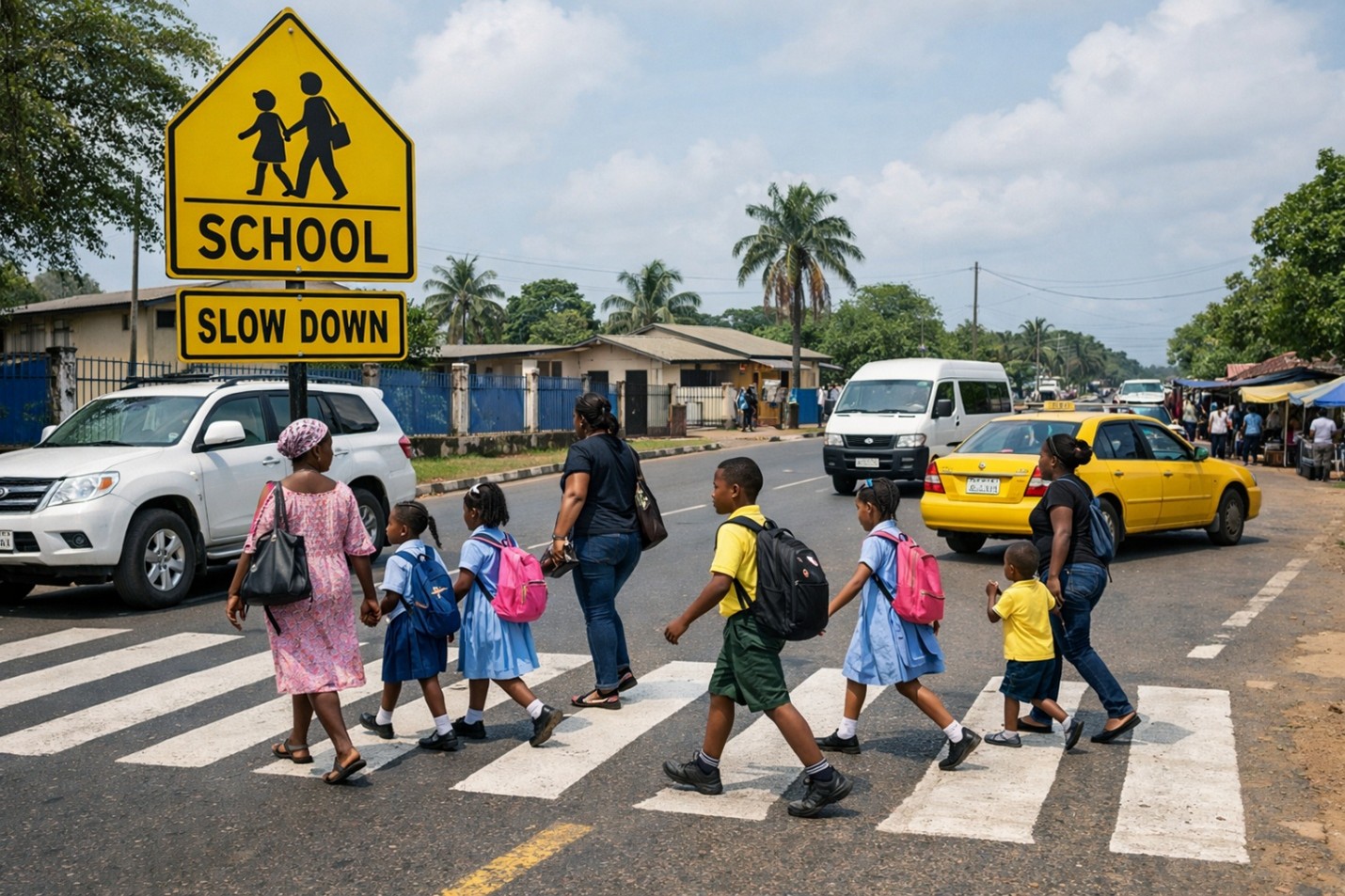
Vulnerable road users across Liberia continue to face a high risk of injury and death as a result of road crashes and traffic-related incidents. In 2025 alone, the Liberia National Police (LNP) recorded 1,564 accidents, 236 deaths, and 992 injuries. This steady increase in road accidents has been particularly evident in hotspot counties such as Montserrado, Nimba, Bong, and Margibi.
Among the most affected are daily commuters, especially pedestrians, many of whom cross major roads and busy intersections at undesignated points. This practice significantly increases the likelihood of collisions, often resulting in serious injuries or fatalities.
2025 crash toll
Liberia National Police figures
- 1,564 Accidents recorded nationwide
- 236 Deaths
- 992 Injuries
- Hotspot counties Montserrado, Nimba, Bong, Margibi
In response to the growing number of crashes and unintended deaths, the Liberia National Police recently issued a directive requiring all pedestrians to use designated crosswalks when crossing major roads. According to the directive, pedestrians who violate this regulation will be fined US$5.
On the surface, this measure appears to be a positive step toward protecting vulnerable road users and promoting safer road behavior. However, for this directive to achieve its intended impact, complementary measures must be implemented. Public awareness and traffic education campaigns are essential, targeting both pedestrians and drivers. Without proper education on road safety rules and the correct use of crosswalks, enforcement alone may not produce sustainable results.
Infrastructure has not kept pace
Additionally, infrastructure challenges present another concern. In many locations, crosswalk markings are faded or barely visible, making them difficult to identify. In areas where crosswalks are clearly marked, both drivers and pedestrians often lack adequate understanding of right-of-way rules and proper road usage.
Crosswalks should not only be markings; they are carefully designed safety zones, which ought to serve many purposes, including increased visibility, traffic flow regulation, and safer paths — all aimed at guiding people through high-risk areas. This gap in knowledge and enforcement, however, weakens the effectiveness of this regulation.
A holistic approach, combining regulation, awareness, and infrastructure improvement, is necessary to create safer roads for all Liberians.
Boyerence Joy Johnson, RSAI
What effective implementation requires
While the new regulation represents a commendable effort to reduce road crashes and fatalities, its success will depend largely on consistent enforcement, improved road infrastructure, and sustained public education. For the effective implementation of this regulation, the Liberia National Police must undertake sustained and comprehensive public education on proper road use, with particular emphasis on traffic signs and road safety rules. Continuous awareness campaigns are essential to ensure that motorists and pedestrians clearly understand their responsibilities and the legal implications of non-compliance.
A shared table, not a single agency
The LNP should convene a structured inter-agency and inter-ministerial dialogue involving the Ministries of Public Works and Transport, as well as drivers' unions and transport associations. Such collaboration would promote coordinated planning, policy alignment, and shared accountability in enforcing traffic regulations. Through this partnership, road safety education can be systematically cascaded to commercial drivers, who represent a significant portion of daily road users and often influence broader public transport behavior.